
Make a useful first base
Start with shelter, crafting and storage, then expand after you have used the space. A base that supports a short exploration loop is more useful early on than an unfinished large settlement.
Choose an accessible place with room for your next few stations. Springlands is a sensible starting region while you establish travel tools and survivor quests. This is a practical preference, not a ranking of every base site in the game.
Build in a simple order
- Establish your Flame Altar and working area. Keep the usable build boundary in mind before laying out a large plan.
- Place the Workbench and a compact shelter. Make the first room usable before decorating an entire town.
- Add storage near the work area. Separate frequently used materials from equipment and occasional finds.
- Place rescued survivors and their stations. Follow their actual housing and crafting requirements rather than assuming every NPC needs an elaborate detached house.
- Improve comfort and your preparation area. Make it easy to rest, eat, repair and leave for the next trip.
Use the beginner guide for the opening progression loop and the distinction between upgrading the altar's build area and strengthening the Flame.
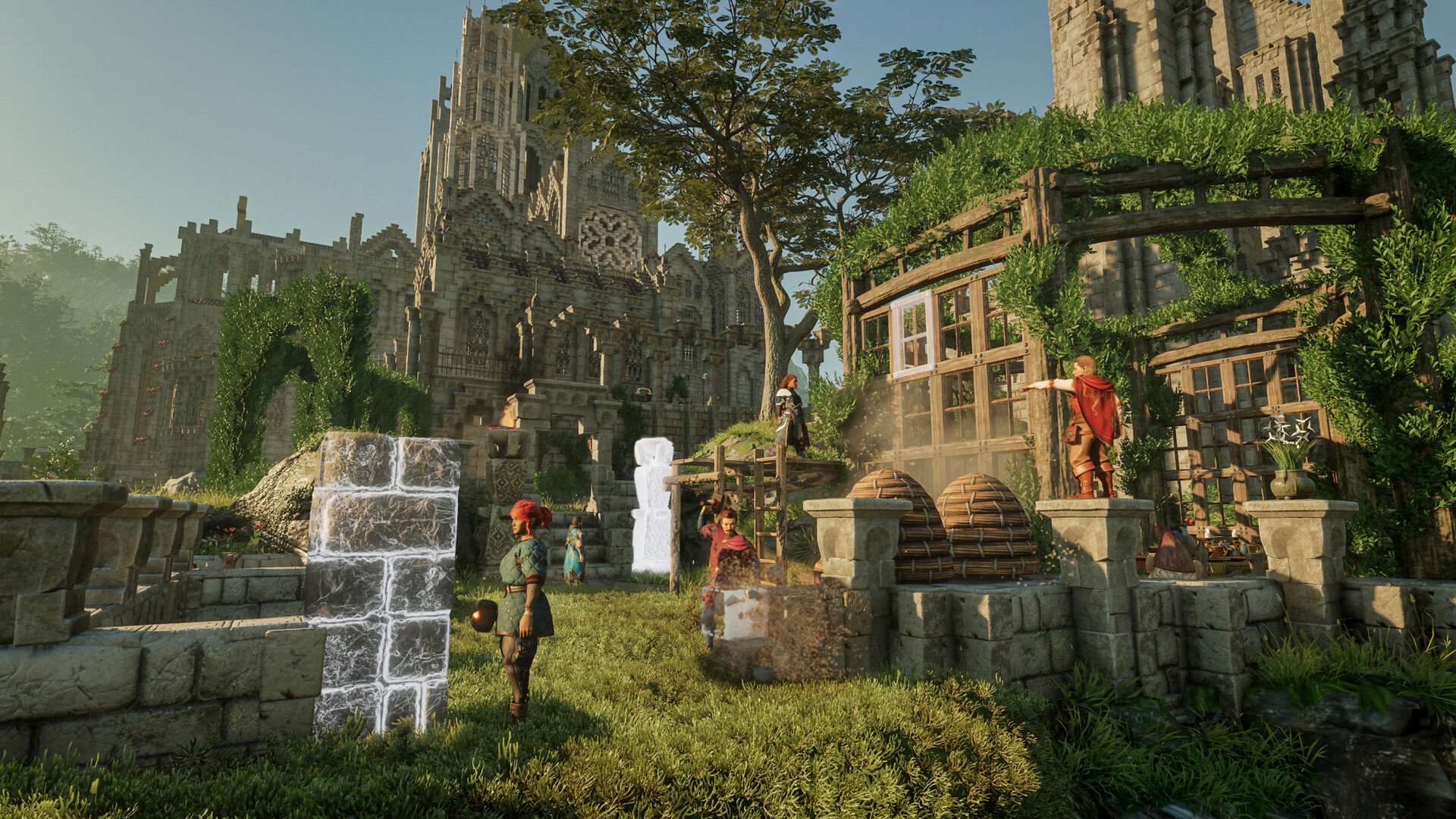
A layout you can expand
| Area | Place it near | Why |
|---|---|---|
| Arrival and preparation | Your usual entry point | Restock, repair and leave without crossing the whole base |
| Crafting | Frequently used storage | Reduce unnecessary carrying and searching |
| Survivor workspaces | Their relevant stations | Keep the crafting workflow understandable |
| Living and comfort | A sheltered rest area | Make preparation convenient |
| Water experiments | A separate contained area | Keep an early test away from the main workshop |
This is a zoning suggestion, not a fixed floor plan. Walk through the base with a loaded inventory and notice what repeatedly forces a detour. Move that storage or station before adding another wing.
Storage and resource trips
Label or consistently group materials so you can tell what is missing for the next recipe. Decide on one station or project target before collecting a full backpack of unrelated resources.
Our location guides cover clay, tin, iron and amber. Count the other recipe ingredients as well; obtaining one material does not finish a crafting unlock.
Add water and logic later
Test one small pond using the water guide before connecting a canal to your house. Watch the inlet, rim and drainage rather than copying a large decorative build without understanding its flow.
For an interactive project, Sparkworks links triggers such as pressure plates or levers to outputs such as doors and traps. Start with one visible input and one output, test that pair, then extend it. You do not need a logic system to finish a functional first base.
In a shared world
Agree on where communal materials go and which projects are shared. Keep an ordinary world backup before major reorganizations. If the group's host needs to stay available independently, compare the dedicated-server route.
Success check: you can return from a trip, unload, craft, restock and leave again without getting lost in your own base. Improve the part that slows that loop before expanding for appearance alone.
Sources and version
Reviewed November 1, 2026. The layout and build order are editorial suggestions based on the collected building material, not a tested best-location ranking.